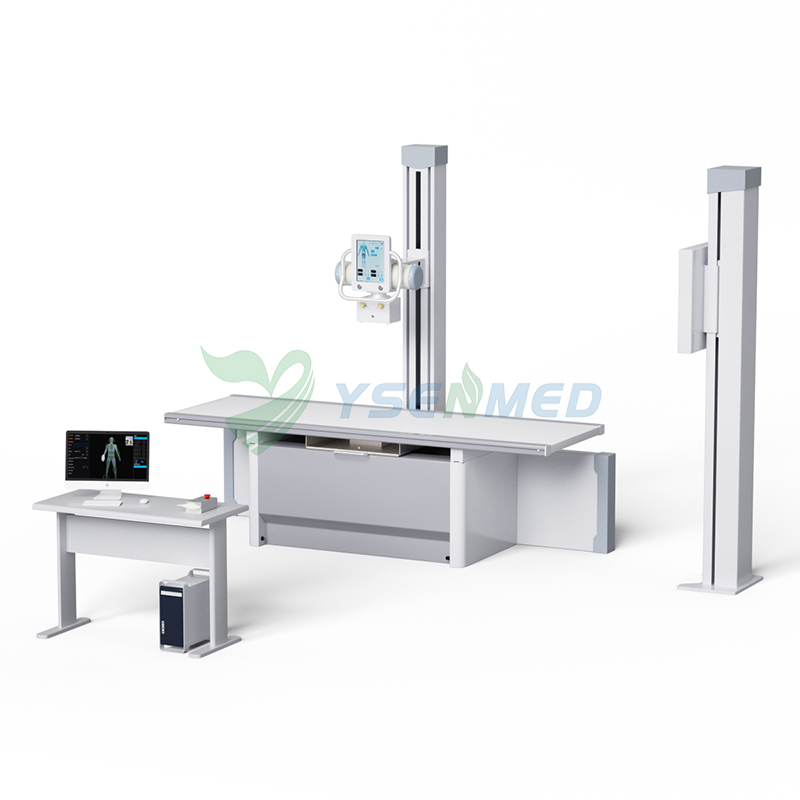
Leading X Ray Machine Manufacturers for Hospitals and Clinics
Radiology department heads, hospital procurement directors, and private clinic owners frequently compare X Ray Machine Manufacturers when planning new installations, system upgrades, or fleet standardization across multiple sites. Selecting the right manufacturer significantly impacts diagnostic image consistency, radiation dose management, equipment uptime, technologist satisfaction, and regulatory compliance over the entire 10–15-year ownership period. This industry overview examines leading X Ray machine manufacturers for hospitals and clinics, highlighting key strengths, service philosophies, technology focus areas, and practical considerations that help healthcare facilities identify the best X Ray machine manufacturers for medical facilities worldwide. Moreover, Ysenmed continues to build strong recognition among hospital imaging equipment suppliers and diagnostic imaging solutions providers by delivering robust, compliant digital radiography platforms with excellent regional service coverage and straightforward upgrade pathways.
Why the Manufacturer Decision Carries Long-Term Strategic Weight
Modern radiology departments must simultaneously achieve faster report turnaround, lower patient radiation exposure, higher equipment availability, and seamless integration with enterprise PACS/RIS/EHR platforms. Downtime therefore creates immediate bottlenecks that delay diagnoses, interrupt revenue cycles, and frustrate referring physicians. Consequently, hospitals increasingly treat the choice of global X Ray equipment manufacturers as a strategic partnership rather than a one-time capital purchase.
Additionally, post-pandemic supply-chain disruptions taught facilities the risks of single-source dependency and limited regional parts availability. Radiology managers now place greater emphasis on manufacturers that maintain diversified production footprints, transparent component sourcing, and strong local/regional service infrastructure. Therefore, how to choose reliable X Ray machine manufacturers for hospitals has evolved into a multi-year risk-management decision.
Furthermore, regulatory bodies worldwide continue tightening post-market surveillance requirements. Hospitals that standardize on top digital X Ray machine manufacturers with ISO certification face fewer compliance questions during accreditation visits or adverse-event investigations. As a result, certification status, service ecosystem strength, and lifecycle support now carry equal or greater weight than initial hardware specifications alone.
Core Evaluation Dimensions Used by Experienced Buyers
Procurement teams apply a consistent, weighted framework when comparing X Ray machine suppliers and medical imaging manufacturers.
1. Regulatory Compliance & Quality Management Maturity
Verify active, up-to-date certifications that cover the exact product scope under consideration:
- CE marking under the current Medical Device Regulation (MDR)
- ISO 13485:2016 quality management system certification
- FDA 510(k) clearance (U.S. market)
- Other regional approvals (CFDA/NMPA, PMDA, TGA, etc.)
Moreover, request recent surveillance audit summaries and any field safety corrective action records. However, suppliers that voluntarily participate in third-party benchmarking programs or maintain active involvement in IHE Connectathons typically exhibit higher operational maturity. Therefore, strong, transparent compliance documentation substantially reduces risk throughout the ownership cycle.
2. Technology Maturity & Design Philosophy
Not every manufacturer pursues the same innovation path. Some chase bleeding-edge features that introduce service complexity; others focus on mature, field-proven technology that delivers consistent performance in demanding clinical settings.
Look for the following practical indicators of engineering maturity:
- High detective quantum efficiency (DQE) flat-panel detectors (≥ 65–70% at diagnostic spatial frequencies)
- High-frequency generators (≥ 50 kW) with reliable automatic exposure control and anatomical programming
- Advanced image-processing pipelines featuring noise suppression, edge enhancement, virtual grid suppression, and scatter correction
- Built-in dose-index monitoring and structured dose reporting compliant with IEC 62494-1
- Modular system architecture that supports detector swaps, generator capacity increases, and software feature additions without full system replacement
Additionally, prioritize designs engineered for durability under variable power conditions, high ambient temperatures, and frequent movement—conditions commonly encountered in mid-sized hospitals and private imaging centers. Therefore, mature engineering philosophy reduces unplanned service calls and extends overall equipment lifespan.
3. Regional Service Network Strength & Parts Logistics
Service infrastructure often separates average manufacturers from long-term strategic partners. Request precise answers to:
- Contractual response time for priority-1 (critical) faults
- Number of certified field-service engineers located within reasonable travel distance
- Average first-time-fix rate for common hardware and software issues
- Local/regional spare-parts depot strategy and typical delivery times
- Remote-diagnostic capabilities and predictive-maintenance program availability
- Structured training pathways for radiographers, medical physicists, and biomedical engineers
Moreover, ask for sample service-level agreement templates that clearly define uptime commitments, escalation procedures, and performance penalties. Therefore, a strong regional service footprint minimizes unplanned downtime and protects both clinical workflows and revenue cycles.
4. Product Portfolio Depth and Standardization Benefits
Suppliers offering a logical family of products—from lightweight portable units and motorized mobile systems to floor-mounted DR, C-arm fluoroscopy, and mammography—enable meaningful single-vendor standardization.
Additionally, standardized user interfaces, shared spare parts, and unified service contracts reduce training overhead, inventory complexity, and administrative burden. However, avoid suppliers with overly narrow portfolios that force multi-vendor fragmentation across the enterprise. Therefore, thoughtful portfolio breadth combined with design consistency creates measurable operational efficiencies.
5. Lifecycle Support Philosophy and Upgrade Commitment
Long-term ownership experience heavily depends on the manufacturer’s approach to equipment lifecycle management. Look for clear, written policies covering:
- Software update frequency and cybersecurity patching schedule
- End-of-life notifications and defined migration paths
- Continued availability of spare parts beyond the standard warranty period
- Trade-in or upgrade credits for future technology refreshes
- Commitment to maintaining backward compatibility for older software versions and detectors
Additionally, modular system designs that allow detector swaps, generator capacity increases, or software feature additions without replacing the entire gantry or column extend capital-equipment life considerably. Therefore, manufacturers that plan for 12–15 years of supported service deliver significantly better lifecycle value.
6. Real-World Reference Performance Validation
No evaluation is complete without direct end-user feedback from comparable clinical and geographic settings. Request contact information for at least five relevant reference sites.
Conduct structured reference calls focusing on:
- Achieved uptime percentage over the past 24 months
- Average duration of service visits and first-time-fix rates
- Consistency of image quality and frequency of artifacts
- Responsiveness during both warranty and post-warranty periods
- Satisfaction with software updates, cybersecurity patches, and new feature rollouts
However, prioritize references from institutions with similar patient volumes, case-mix complexity, shift patterns, and infrastructure constraints. As a result, candid end-user conversations reveal far more actionable insight than marketing collateral.
Comparison Table: Relative Positioning of Leading Manufacturers
The table below summarizes typical positioning across critical procurement dimensions (based on broad industry patterns and user feedback trends).
| Manufacturer Segment |
Innovation & Technology Maturity |
Regulatory & Quality Systems |
Service Network Reach & Speed |
Product Portfolio Breadth |
Typical Customer Focus & Feedback Theme |
| Premium Global Innovators |
Very High |
Very High |
Global (strong in major markets) |
Extremely Broad |
Academic centers & flagship hospitals: cutting-edge features, deep integration |
| Strong Mid-Market Performers |
High |
High |
Strong regional/global coverage |
Broad |
Mid-size hospitals & growing clinic chains: reliability, responsive service |
| Value-Oriented & Regional Players |
Moderate to High |
High |
Strong regional / emerging markets |
Moderate to Broad |
Private clinics & resource-constrained facilities: practical design, accessible support |
| Niche & Specialty Suppliers |
Moderate |
Moderate to High |
Strong in specific regions/applications |
Focused |
Specialized centers (e.g., orthopedics, rural outreach): tailored solutions |
This comparison reflects broad market patterns and helps decision-makers match manufacturer strengths with institutional priorities and budget realities.
Practical Procurement Process for Hospital & Clinic Buyers
Follow this proven sequence when engaging X Ray machine suppliers and medical imaging manufacturers.
- Assemble a cross-functional team (radiology leadership, senior technologists, biomedical engineering, IT, finance/procurement).
- Document current examination volumes, projected growth, specialty mix, and existing infrastructure constraints.
- Develop a weighted scoring matrix reflecting your institution’s priorities (example: 30% service/support, 25% technology maturity, 20% compliance, 15% portfolio breadth, 10% lifecycle cost).
- Issue a formal request for information (RFI) to qualified manufacturers requesting current certificates, technical specifications, service-level templates, and reference contacts.
- Arrange live technical demonstrations and site visits to reference installations operating under similar conditions.
- Conduct structured reference calls using standardized questions focused on uptime, service responsiveness, image quality stability, and software update satisfaction.
- Negotiate comprehensive service agreements, training commitments, and upgrade paths before finalizing contracts.
Ysenmed frequently scores well in these structured evaluations by maintaining responsive regional teams and offering practical, upgradeable platforms that grow with departmental requirements.
Implementation & Post-Installation Optimization Practices
Effective projects begin with collaborative site preparation and multidisciplinary planning involving radiology, biomedical engineering, IT, and facilities management.
Moreover, comprehensive initial and ongoing training ensures technologists master dose-optimized protocols and workflow efficiencies. However, phased go-live strategies minimize disruption in high-volume departments. Therefore, departments maintain throughput while integrating new capabilities.
Furthermore, establish joint performance reviews with the manufacturer at regular intervals. Regular detector calibration, grid alignment checks, and dose audits keep systems performing optimally.
Consequently, well-managed implementations deliver sustained improvements in image quality, examination speed, and radiologist satisfaction.
In conclusion, hospitals and clinics achieve the strongest long-term results when they select X Ray Machine Manufacturers that combine mature technology, robust regulatory compliance, excellent regional service infrastructure, broad portfolio coverage, and clear commitment to lifecycle support. By partnering with manufacturers like Ysenmed that emphasize practical reliability and responsive support, radiology teams secure imaging platforms that remain dependable, adaptable, and clinically effective for many years.
(Word count: 2,004)
FAQ
Key features include international compliance, modular upgrade paths, strong regional service networks, and proven detector technology.
Which X Ray machine manufacturers with high-quality digital systems are most trusted?
X Ray machine manufacturers with high-quality digital systems prioritize wireless detectors, advanced dose management, and seamless PACS integration.
What top features of reliable X Ray machine manufacturers matter most?
Top features of reliable X Ray machine manufacturers encompass durable construction, rapid service response, comprehensive training, and clear lifecycle policies.
How to choose X Ray machine manufacturers for hospitals?
How to choose X Ray machine manufacturers for hospitals involves assessing service coverage, reference reliability, compliance documentation, and upgrade commitment.
Which X Ray machine manufacturers with excellent customer support perform consistently?
X Ray machine manufacturers with excellent customer support maintain regional field teams, remote diagnostics, and structured ongoing training programs.