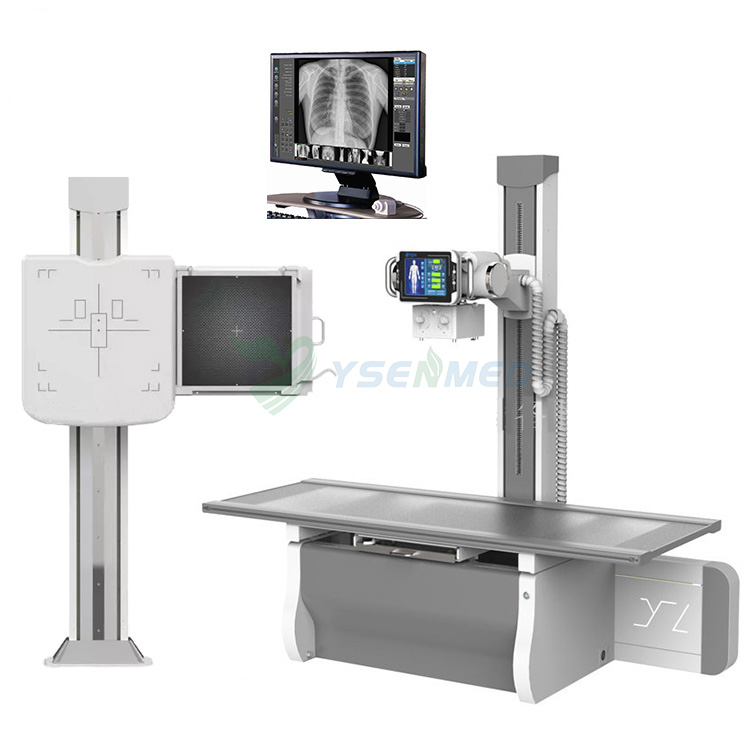
Healthcare professionals in hospitals and clinics increasingly adopt advanced medical imaging equipment to elevate X-ray diagnostics. Procurement specialists recognize that a Digital Radiography X-ray Machine transforms traditional workflows by delivering instant, high-quality images for precise evaluations. Doctors, nurses, and private practice owners prioritize systems that enhance efficiency while maintaining patient safety. In this complete guide to digital radiography X-ray machines for healthcare professionals, we explore core principles, features, and practical applications. Moreover, suppliers like Ysenmed provide reliable digital X-ray machine solutions that integrate seamlessly into modern radiographic imaging system environments.
The Evolution of Digital Imaging Technology in Radiology
Radiologists and administrators actively embrace digital imaging technology to address rising demands for faster medical X-ray machine results. For instance, the global digital X-ray devices market reaches approximately USD 15 billion in 2025, growing at a CAGR of around 8% through 2030, driven by replacements of analog systems. Therefore, facilities transition to digital radiography system platforms for superior performance.
Additionally, innovations in flat-panel detectors dominate advancements. However, buyers evaluate compatibility with existing infrastructure during procurement. On the other hand, Ysenmed offers versatile advanced radiography machine models that support phased upgrades. Consequently, clinics achieve enhanced digital imaging X-ray capabilities without major disruptions.
Technicians operate Digital Radiography X-ray Machine systems by capturing X-rays directly on digital detectors, bypassing film processing. These detectors convert photons into electrical signals instantly, producing images on monitors within seconds. For example, direct radiography (DR) uses amorphous selenium or cesium iodide panels for optimal sensitivity.
Moreover, how digital radiography X-ray machines enhance imaging quality and speed stems from wide dynamic ranges that tolerate exposure variations. Therefore, radiologists adjust contrast and brightness post-acquisition. On balance, this flexibility supports accurate assessments in varied clinical scenarios.
Key Components of Modern Systems
Operators rely on essential elements in high-performance X-ray machine designs. First, generators provide stable power for consistent outputs. Furthermore, floating tables enable multi-position imaging, ideal for orthopedic exams.
Additionally, software algorithms apply noise reduction and edge enhancement. However, wireless detectors boost mobility in portable variants. As a result, teams conduct bedside scans efficiently.
Features and Advantages of Modern Digital Radiography X-Ray Machines
Clinics gain substantial value from features and advantages of modern digital radiography X-ray machines. Procurement experts highlight post-processing tools that magnify subtle details, aiding fracture detection. For instance, AI integrations flag potential abnormalities, streamlining reviews.
Moreover, how digital radiography X-ray machines improve diagnostic accuracy arises from superior resolution and reduced artifacts compared to analog methods. Therefore, physicians identify lesions earlier. On the other hand, dose optimization protocols minimize patient exposure while preserving clarity.
Understanding the Benefits of Digital Radiography X-Ray Machines
Facilities experience multiple gains when adopting digital radiography system technology. First, immediate image availability accelerates throughput by up to 40%. Additionally, electronic storage eliminates physical archives, easing retrieval.
Furthermore, remote access facilitates consultations across sites. However, environmental advantages include no chemical developers. As a result, practices align with sustainable operations.
| Feature |
Advantage |
Impact on Diagnostics |
Common Applications |
| Flat-Panel Detectors |
High sensitivity, instant capture |
Sharper images, fewer retakes |
Chest, orthopedic exams |
| Post-Processing Tools |
Contrast enhancement, zooming |
Better visibility of subtle findings |
Lesion detection, bone assessments |
| AI Integration |
Automated anomaly detection |
Faster reviews, higher consistency |
Pulmonary nodules, fractures |
| Wireless Portability |
Mobility for bedside use |
Reduced patient movement risks |
ICU, emergency settings |
| Dose Reduction Tech |
Lower radiation exposure |
Safer repeated scans |
Pediatric, oncology follow-ups |
This table outlines key features and advantages of modern digital radiography X-ray machines, assisting procurement in matching needs to capabilities. Consequently, hospitals optimize X-ray diagnostics investments.
Types of Digital Radiography Systems
Providers select from varied digital X-ray machine configurations to suit specialties. Fixed systems dominate high-volume radiology departments, offering ceiling-mounted tubes for versatility.
Computed vs. Direct Radiography
Teams compare computed radiography (CR), using phosphor plates scanned post-exposure, with direct methods. Direct systems excel in speed and workflow, dominating new installations. For example, Ysenmed's DR models like YSX-iDR50XD feature wired or wireless panels for flexibility.
Moreover, hybrid fluoroscopy-capable units support dynamic studies. Therefore, interventional suites benefit greatly.
Portable and Mobile Options
Emergency responders favor portable advanced radiography machine units for on-site imaging. These compact designs integrate batteries and touchscreens, enabling rapid deployments.
Additionally, retrofittable kits upgrade legacy equipment affordably. However, full DR conversions yield superior long-term results. As a result, mixed fleets accommodate diverse needs.
Procurement Considerations for Healthcare Facilities
Purchasing specialists scrutinize medical imaging equipment vendors for compliance and support. First, verify certifications like FDA and CE markings. Moreover, assess PACS integration for seamless data flow.
Furthermore, training programs ensure staff proficiency. On the other hand, service contracts guarantee uptime. Therefore, Ysenmed provides comprehensive packages, including installation guidance.
Additionally, scalability allows future expansions, such as adding AI modules. Consequently, investments remain relevant amid evolving standards.
Real-World Applications and Ysenmed Solutions
Ysenmed supplies robust Digital Radiography X-ray Machine options trusted globally. Their portfolio includes floor-mounted systems like YSX320D for general radiography and portable variants for mobility.
Clinics report streamlined operations with Ysenmed's intuitive interfaces. For instance, high-resolution detectors capture detailed bone structures effortlessly. Moreover, low-maintenance designs reduce operational burdens.
In high-throughput settings, Ysenmed's high-performance X-ray machine models handle diverse exams, from chest screenings to extremity views. Therefore, radiologists deliver timely reports. On balance, these systems elevate digital imaging X-ray standards across facilities.
Future Trends in Digital Radiography
Innovators push boundaries with photon-counting detectors and deeper AI analytics. These promise even greater dose efficiency and spectral imaging for material differentiation.
Additionally, wireless advancements enhance portability. However, cybersecurity remains paramount for networked systems. As a result, vendors like Ysenmed prioritize secure architectures.
Moreover, understanding the benefits of digital radiography X-ray machines extends to predictive maintenance via cloud monitoring. Consequently, downtime minimizes significantly.
In conclusion, embracing Digital Radiography X-ray Machine technology equips healthcare professionals with powerful tools for superior outcomes. Ysenmed supports this transition with dependable, innovative solutions—explore ysenmed.com to discover options that advance your radiographic imaging system today.
(Word count: 1,492)
FAQ
A Digital Radiography X-ray Machine captures images electronically using detectors, offering instant results and enhanced manipulation for better X-ray diagnostics.
How do digital radiography X-ray machines improve diagnostic accuracy?
How digital radiography X-ray machines improve diagnostic accuracy through superior resolution, post-processing, and AI aids that highlight subtle abnormalities reliably.
What are the benefits of digital radiography X-ray machines?
Understanding the benefits of digital radiography X-ray machines includes faster imaging, lower radiation, easy storage, and improved workflow in medical imaging equipment.
How do digital radiography X-ray machines enhance imaging quality and speed?
How digital radiography X-ray machines enhance imaging quality and speed with direct digital capture, eliminating film development for immediate, adjustable high-clarity views.
What features define modern digital radiography X-ray machines?
Features and advantages of modern digital radiography X-ray machines feature flat panels, wireless options, and integration for efficient digital imaging technology.